
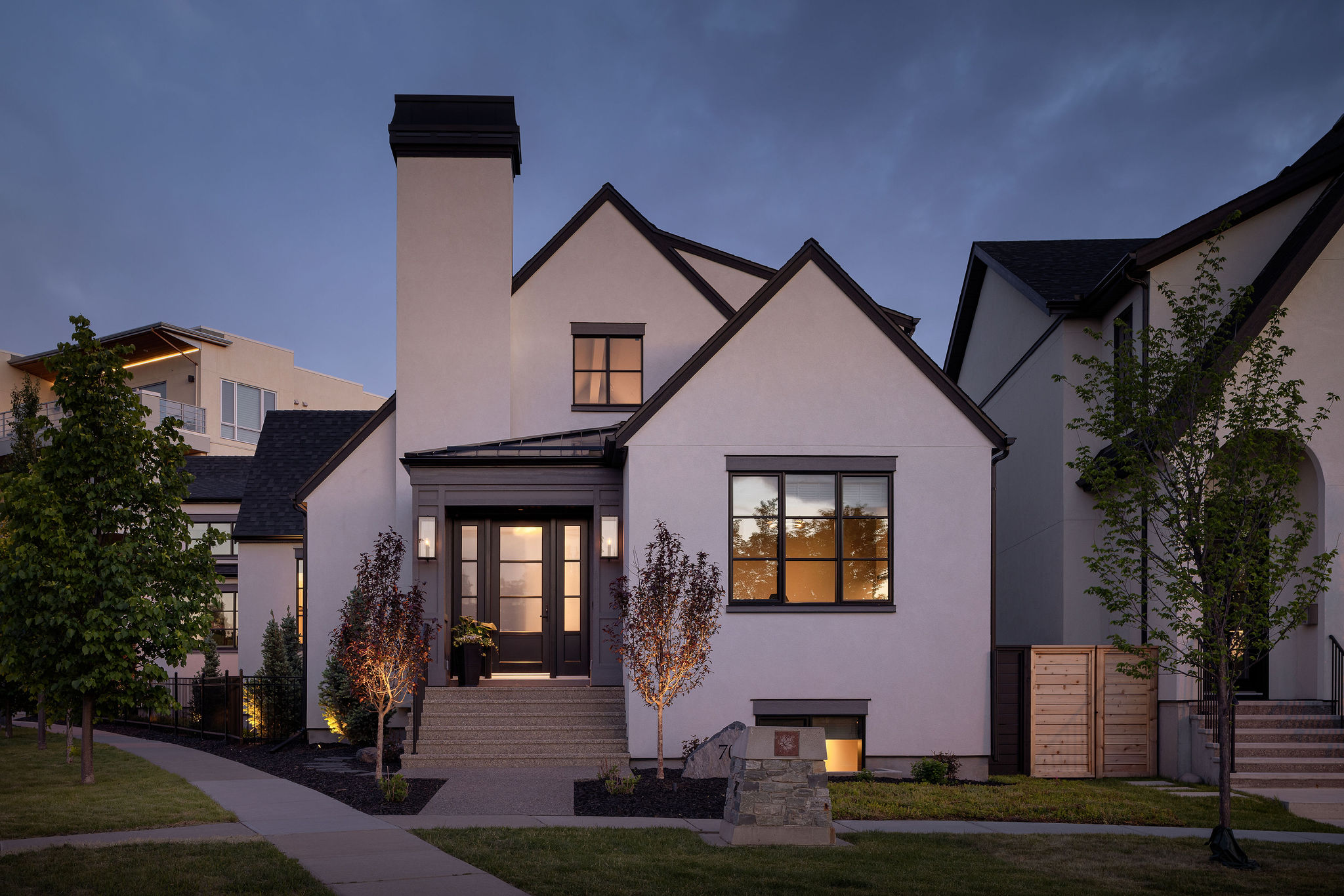

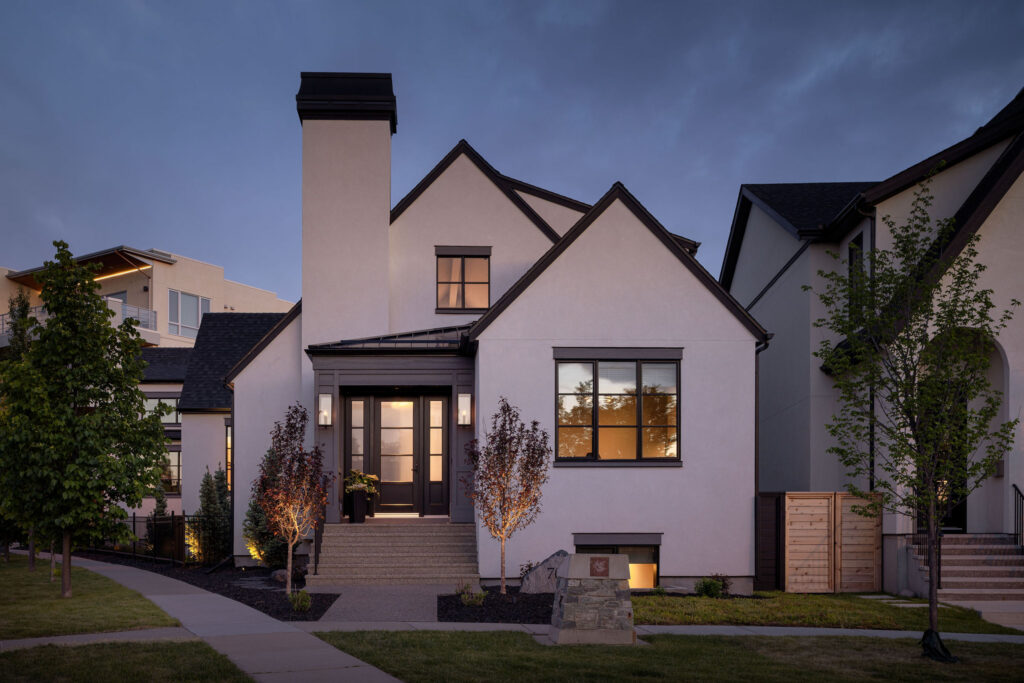
What matters most when choosing a custom home builder?
Building a custom home is so much bigger than your everyday purchase. You are designing the house for your future daily life, from the way your mornings start to where everyone gathers at night. What tends to make the biggest difference is working with the same team the whole way through, from the first drawing to the day you move in, so the people who designed your home with you are the ones who build it.
The basic checks come first. Every licensed builder in Alberta has passed these checks before they can take out a permit. A residential builder needs a provincial licence, and every new home needs new home warranty coverage before a building permit can be issued, both of which you can confirm for free on the province’s builder registry and property registry. RenoMark is the accreditation to look for on a renovation, and we are RenoMark members for our renovation work. Our guide on where to start with a custom home walks through each registry and what it shows.
The differences between builders show over the long term, in the quality of the home years later and in who carries the responsibility once you have the keys. Ask each builder you meet who you call after possession, and who sends the trade.
Should you choose a design-build firm or hire an architect and builder separately?
Both routes work well. Design-build means one firm handles the design and the construction under one agreement. The team drawing your house is pricing it as it develops. Hiring an architect first and a builder after, often called design-bid-build, gives you the widest choice of designer, though you hold two contracts and the builder usually prices the design once the drawings are further along.
Either way, look for a builder who prices the drawings while they are still moving, so you know what each decision costs while it can still change. With your own architect, that means a builder who has worked alongside outside architects and comes in early. Our where-to-start guide explains how that works.
We work both ways, with your own architect or designer or with our internal architect and design team. Under our formal Design Agreement, our architectural and construction teams develop the floor plans, site studies and elevations with buildability and budget in mind.

What should you ask a custom home builder in Calgary before you sign a contract?
Ask every builder the same questions, so you can lay their answers side by side. They cover how you will work together, how design and selections are handled, how the house is priced and changed, and what happens after you move in.
| Question | Why it matters | How we answer it |
|---|---|---|
| Working together | ||
| Who will be my day-to-day contact? | One consistent person keeps decisions from getting lost between people | A construction manager is your consistent contact on site, and our home owners stay involved from the first call to move-in |
| Can I visit my own site, and when? | It is your home, and seeing each stage is important to see the quality of the work. Companies with nothing to hide are ok with this transparency. | Whenever you want, safely. Our construction managers are on site daily, and clients visit at any stage of the build |
| How often will I hear from you, and how? | A custom home asks for decisions all the way through, and a regular rhythm keeps them from stacking up | Detailed weekly updates every Friday, and project software with progress photos and details you can open any time |
| Design and selections | ||
| Do you design in-house, and will you work with my architect? | If you already have an architect, a builder who only builds its own designs may ask you to start again. If you want one team for both, a builder without in-house design leaves you finding and managing a designer yourself | Both. We offer full design-build from concept to completion, and we are happy to collaborate with your architect or designer |
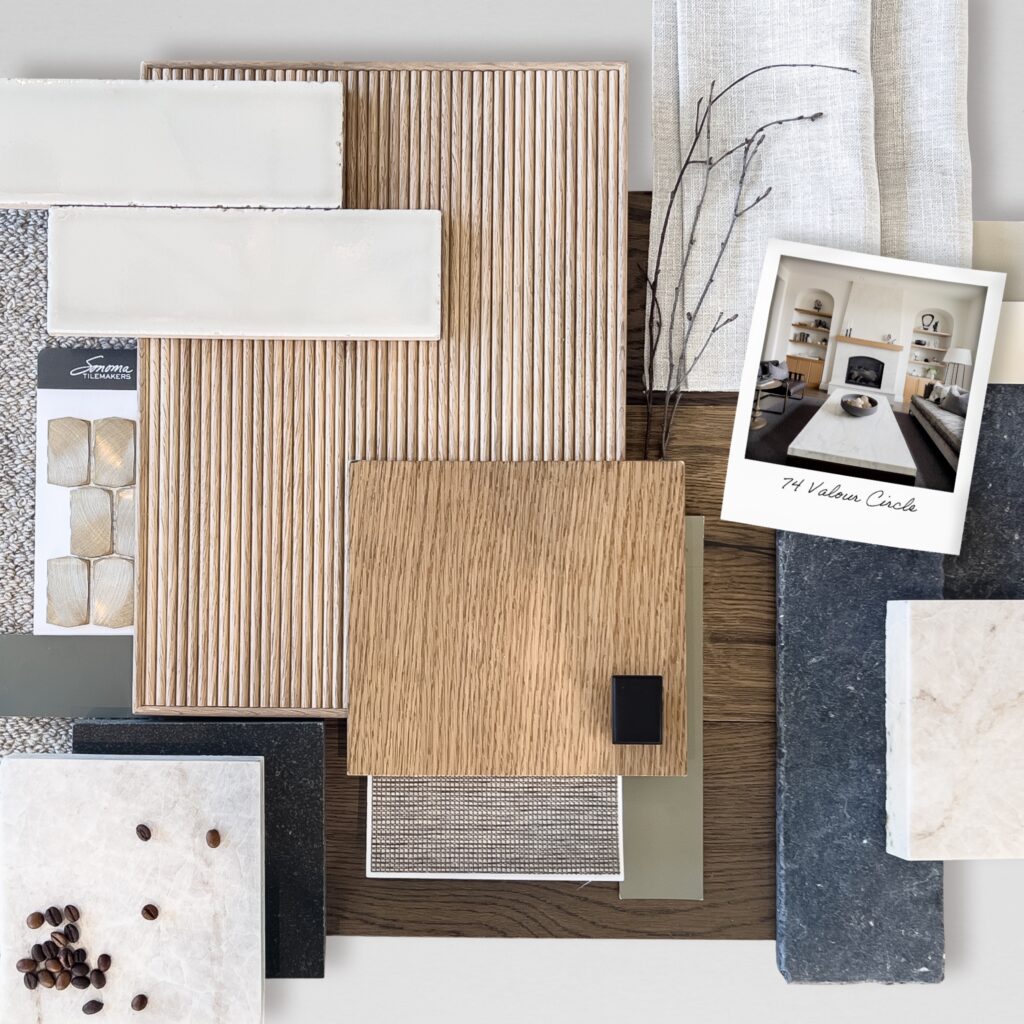
| When are selections made, and how are they priced? | Cabinetry and appliances decide where the plumbing, wiring and ducting go, so they have to be chosen before those rough-ins happen. Selections made late can hold up the build, and a selection that is only priced at the end can move your budget once it is too late to change course | In our Selections + Financials stage, before construction, with cabinetry and appliances first because the rough-ins depend on them. You have real-time access to your selections, quotes and timelines |
| Pricing and changes | ||
| Is your contract cost-plus or fixed price? | It decides how much of the cost you can see. With cost-plus, you see what each part of the house costs, plus the builder’s fee. With a fixed price, you see one total with the builder’s margin and its allowance for the unexpected built in, and a change is priced against the original scope | We are a cost-plus builder, so you see what each part of the house costs as it is priced, with our fee set out in the contract |
| Will I see what the trades are charging? | Seeing the trades’ charges lets you check what you are paying for, line by line. Without them, a price is a number you have to take on trust | Yes. On a cost-plus build you pay what the work costs, so you see what the trades charge, with real-time access to your quotes through our project software |
| How is a change priced, approved and billed? | Changes come up on any custom home. If the process is not agreed up front, a change can arrive as a surprise on an invoice, with admin fees you did not expect, or hold up the build while it waits for approval | You pay what the change costs, plus the agreed fee. |
| How do you set allowances for the things I have not chosen yet, like tile, appliances and countertops? | An allowance is the amount a quote sets aside for a finish you will choose later. If it is based on the lowest-priced tile, the quote looks lower than another builder’s, and the difference comes back to you as an extra cost once you choose the tile you actually want | We set realistic allowances for things like tile, appliances, countertops up front from what you have shown us and your specific taste |
| If something unexpected comes up during the build, how will you tell me, and who decides what happens next? | Surprises can come up on any custom build. If a builder makes the call without you, you can end up paying for a fix, or living with a change, that you never agreed to | We walk you through what we found and the options, and you decide how far to go, because honesty with our clients is something we pride ourselves on |
| Who handles permits and inspections? | Every new home needs a building permit and inspections at set stages of the build. If it is unclear who is responsible, a missed inspection can stop the work or mean opening finished walls so an inspector can see behind them | We secure the permits, coordinate the inspections and make sure the home meets local requirements |
| After you move in | ||
| What does service look like after move-in? | Small things show up in the first year or two in any new home as it settles. If service after move-in is not clear, you can be left chasing trades yourself for fixes the builder should handle | Your home is protected by the Alberta New Home Warranty Program and supported by our dedicated service team |
| Can I talk to clients whose homes are a few years old? | Past clients can tell you how a builder looked after them once the build was done | Ask us. Talking to past clients is one of the first checks Kevin Mullen, our Founder and President, recommends making of any builder |
How can you see the quality of a builder’s work?
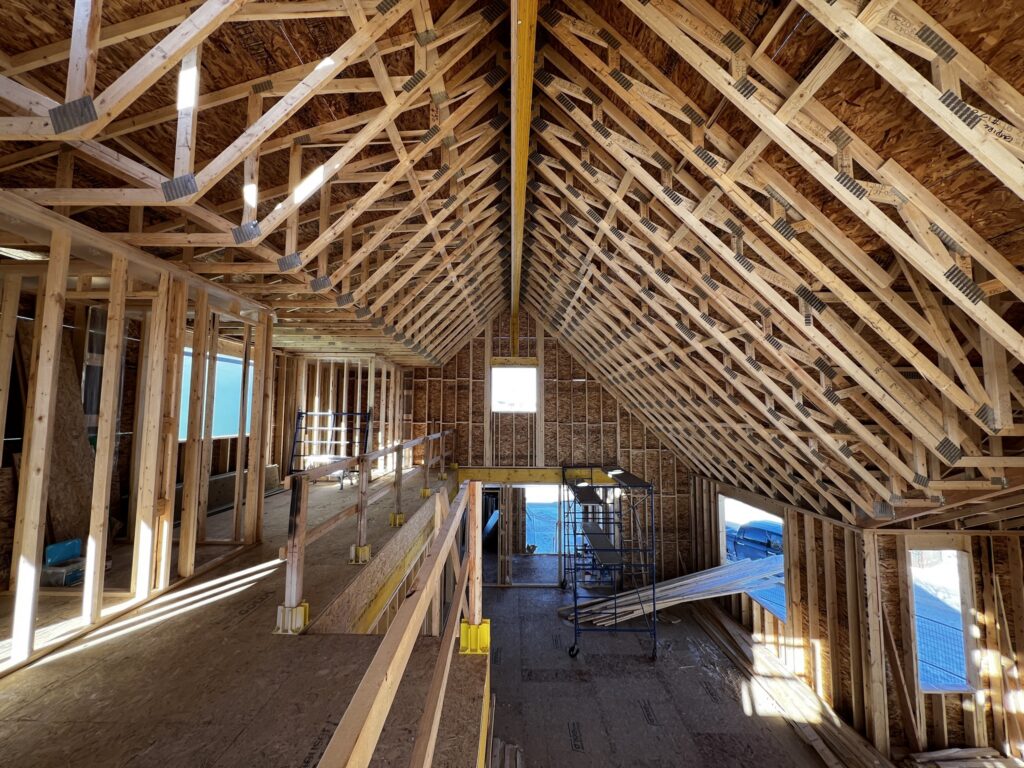
See the work a finished home hides. Ask to visit a home under construction and to see photos taken before the drywall went up. Mike, our Project and Construction Manager, puts it this way. “You might not be able to see it, but it’s all the rough-ins, the different ways we add backing, making sure the structure is really well supported, and will last for decades.”
Backing is a good example. We add it behind towel bars, toilet paper holders, cabinet runs and return-air covers, which takes a few hours at framing and keeps a fixture from sagging a year later. We also photograph the whole house before the drywall goes up, so there is a record of what sits behind every wall. Before handover, several of our people do their own quality check, and then we walk the house with you. “If one of us doesn’t like it, we fix it,” Mike says.
When you meet a builder, ask to:
- Visit a home under construction, while the framing and rough-ins are still open.
- See the photos taken before drywall on a home that is finished.
- Talk to clients whose homes are a few years old, and ask how the builder looked after them once they moved in.
- Meet the people you would work with each day, including the construction manager on your site.
Should you choose a cost-plus or fixed-price builder?
Choose cost-plus when your home will be shaped by decisions made along the way and you want to see every cost, and fixed price when the design is complete and you want one total agreed up front. In the Canadian Construction Documents Committee’s standard contracts, a stipulated price contract sets “a single, pre-determined fixed price, or lump sum, for the project”, while a cost-plus contract pays the contractor “on an actual-cost basis, plus a percentage or fixed fee which is applied to actual costs.”
The difference shows when you make decisions along the way. With a fixed price, the builder takes on the risk of what the work will cost. Its margin and its allowance for the unexpected sit inside the total, which is the one figure you see. A change after signing is priced against the agreed scope. With cost-plus, you pay what the work costs plus the builder’s fee, so each change is priced at what it costs and the house can keep developing as you make your selections.
We are a cost-plus builder, so you’ll always know what’s included and exactly what it costs. For us cost-plus means transparency and flexibility, with no admin fees on changes and real-time access to your selections, quotes and timelines through our construction management software. When the decisions are made before construction starts, Kevin’s experience is that a house can land within one or two per cent of its budget.
On either contract, ask what the fee or margin covers, how a change is priced and approved, and what you will be able to see of the costs as the build goes.
How do you compare quotes from different builders?
Give every builder the same drawings and the same list of selections, then line the quotes up row by row. Two quotes for the same house can sit far apart because they are describing different houses. Kevin compares it to setting a BMW beside a Mercedes and asking, “Is it even the same series? The same size, the same level of detail?”
Check these four rows on every quote you receive:
- Inclusions and exclusions, meaning what each quote covers and what it leaves for you to arrange or pay for separately. As an example, maybe it includes architect drawings, or maybe it doesn’t.
- Allowances, and the selection each one is based on. One quote might price the most affordable appliance package while another prices the package you actually want, and an allowance set below your taste makes a quote look cheaper up front than the house will be.
- The contract type, whether the figure is a fixed price or a cost-plus estimate, and what the fee or margin covers.
- What the quote is based on, detailed drawings and selections or an early sketch. An estimate prepared before the selections exist rests on a lot of assumptions.
When one quote comes in much lower, ask what it was based on. Then put the same selections into every quote and see where the totals land.
What should you see in writing before you sign?
Before you sign, ask to see each part of the agreement on paper, from the design agreement and the construction contract to the allowances, payments, changes and warranty. Each one settles a question that is far easier to agree before the build than partway through it.
- The design agreement, which sets out what the design phase covers, what you receive at the end of it and what it costs. Ours is a formal Design Agreement, under which early concepts become clear, well-developed plans.
- The construction contract, with the scope of the build, its pricing type, cost-plus or fixed price, and the builder’s fee or margin set out.
- Inclusions and exclusions, so you know everything the price covers and everything it leaves out.
- The allowance schedule, with each allowance, its amount and the selection it was based on.
- The payment schedule, showing when each payment falls due, what stage of the work it is tied to and how it lines up with Alberta’s prompt payment rules.
- Warranty enrolment. The builder registers the home with a warranty provider and receives a Registrar’s Certificate before applying for the building permit, and once the permit is through you can confirm the coverage yourself on the province’s property registry.
Bring us your questions
Bring every question in this guide to a first conversation, and we will answer each one for your home, your lot and your budget. Our owners take that first call, so you will be talking with the people who stay involved until you move in, and who have designed and built homes in Calgary since 2003.
Common questions
How do I compare custom home builders in Calgary?
Compare custom home builders in Calgary on whether one team will take your home from the first drawing to move-in, once each has passed Alberta’s licence and new home warranty checks. Ask every builder the same questions, including whether you can visit your own site, see what the trades are charging and get regular updates. Then visit a home each one has under construction, talk to clients whose homes are a few years old, and give each the same drawings and selections to price, so the quotes can be lined up row by row.
Who are the best custom home builders in Calgary?
The best custom home builder in Calgary is the one whose design process, pricing and service suit your home and the way you want to work. Start with builders whose finished homes you admire, confirm each one on Alberta’s builder registry, then ask each the same questions, see a home they have under construction and talk to their past clients.
What is a cost-plus contract?
A cost-plus contract is a building contract where you pay the actual cost of the work, the materials, labour and trades, plus the builder’s fee, set as a percentage or a fixed amount. The Canadian Construction Documents Committee’s standard cost-plus contract, CCDC 3, describes it as work done “on an actual-cost basis, plus a percentage or fixed fee which is applied to actual costs.” It suits a custom home, where selections are made as the design develops, because each one is priced at what it costs.
Is a custom home builder the same as a general contractor?
Often, yes. A general contractor is the one company accountable for the build, with every trade on the site reporting to it, and on our homes Empire is the general contractor. That gives you one party responsible for the work, who holds the trades accountable on your behalf.
What is the difference between a custom home builder and a production builder?
A production builder builds from a set of plans offered to many buyers, with choices made from a list of options, while a custom home builder designs one house around one client, usually on the client’s own lot. Kevin puts the custom side simply, “We’re making decisions for one person at a time.”
Can I use my own architect with a design-build firm?
Yes. If you already have an architect or designer, we are happy to collaborate, and our team prices the drawings as they develop and builds alongside your architect.
Do awards matter when choosing a home builder?
Awards are one useful signal, because each one recognises a specific project judged by industry professionals. Look at the category and the project behind an award, and how close it is to the home you want to build. Our work has been recognised with a number of awards and nominations over the years.
Keep reading
Related articles

Where to Start With a Custom Home in Calgary
Where do you start if you want to build a custom home? Deciding to build a custom home can feel equally exciting…

Custom Home or Renovation: Which Do You Need?
Deciding whether to renovate or start again is a big decision with a hundred smaller ones folded inside it. First, you need to understand what you want from the finished space, before assembling a team. A renovation is a long list of considerations, and a custom home is a long list of decisions.
What Standards Are Available for My Healthy Home?
The four standards Western Canadian homeowners can use to build a healthier home, what each one certifies, and how Empire Custom Homes brings them together through its RESIDE Healthy Standard.